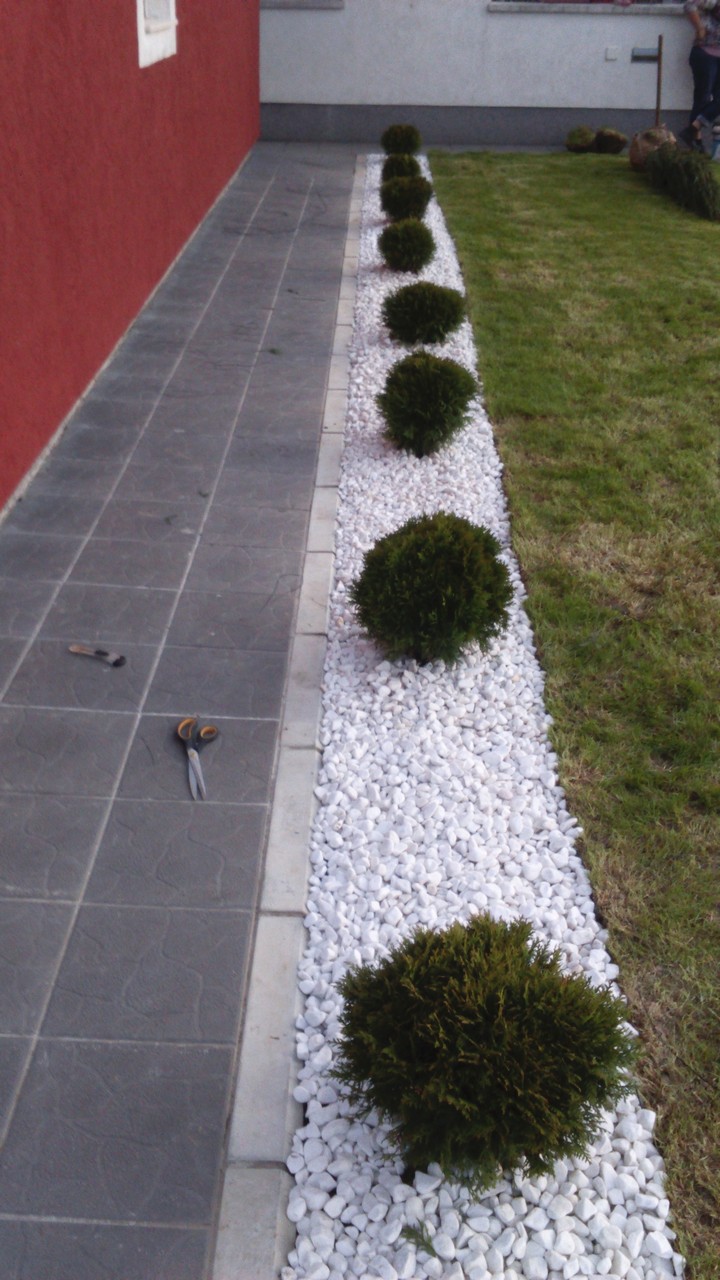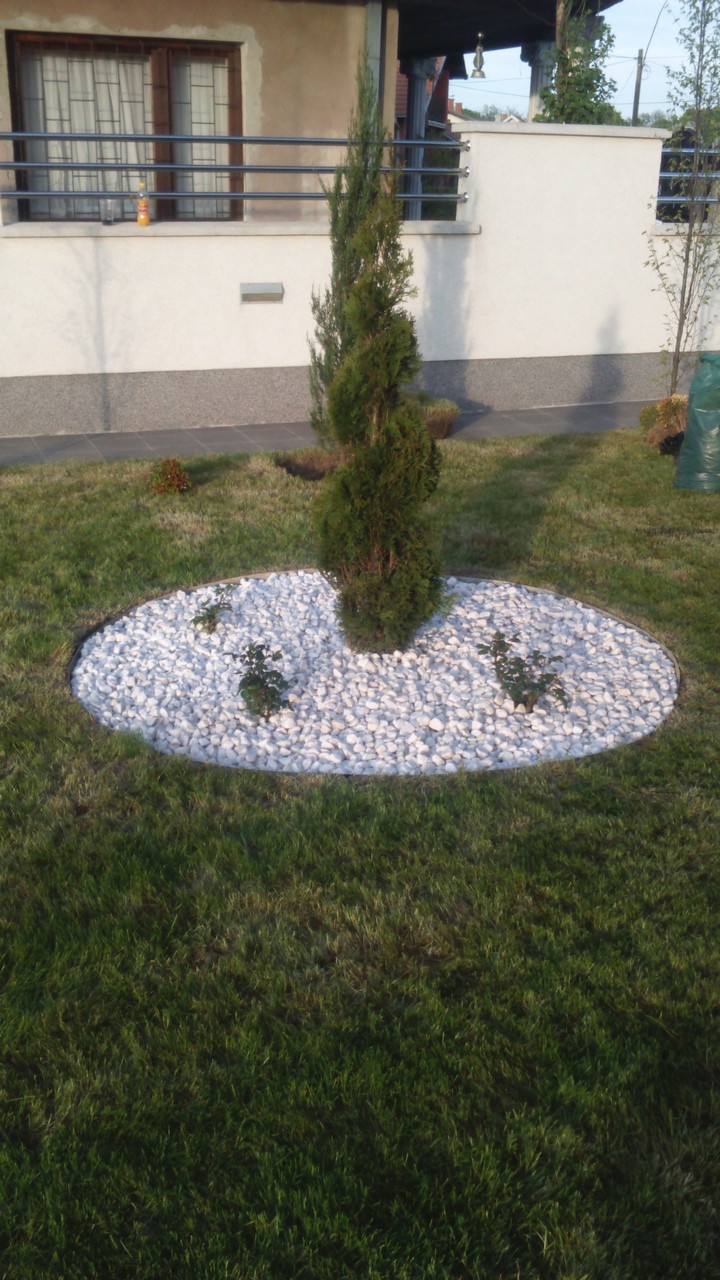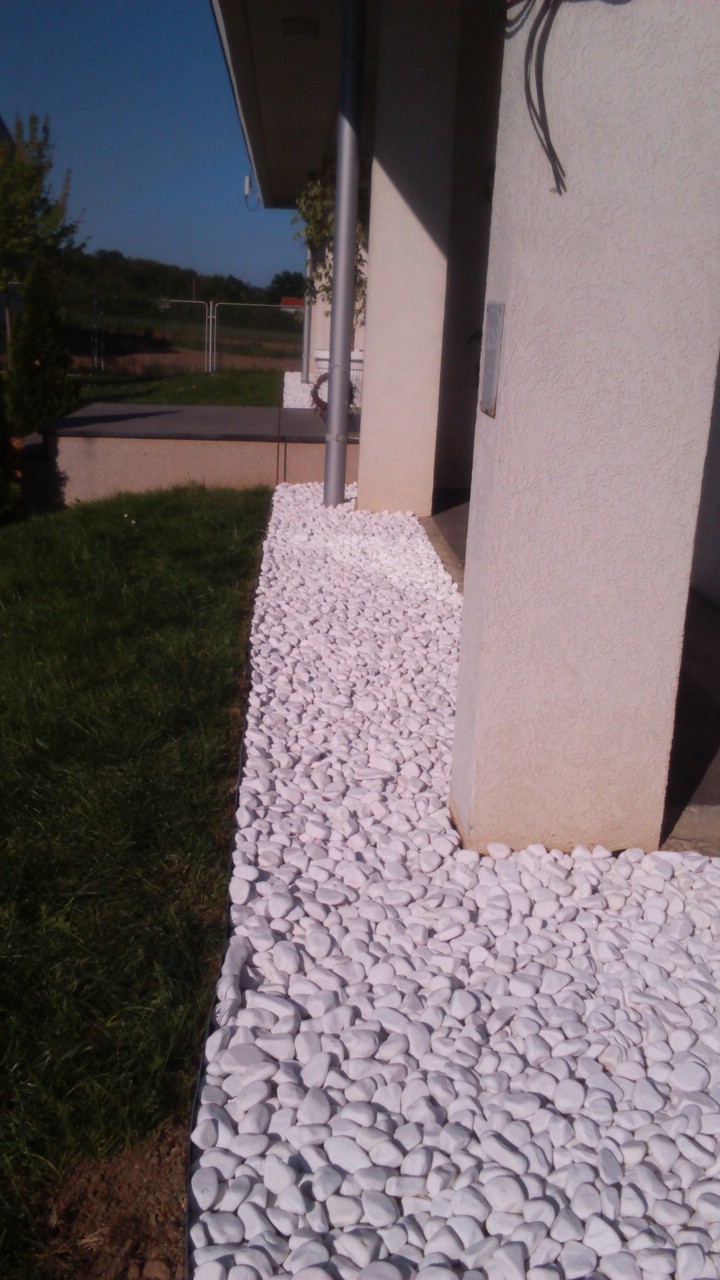
You do not need a professional to landscape a garden with decorative stone. With a little planning, basic tools and the right amount of stone, you can make a flower bed, a path or a strip around the house yourself in one or two days. This is the method we recommend to customers who lay decorative garden stones themselves.
What you need: a spade or hoe, a rake, a tape measure, geotextile (weed control fabric), metal, plastic or stone edging, a wheelbarrow and, of course, pebble stone in a size that suits your area.
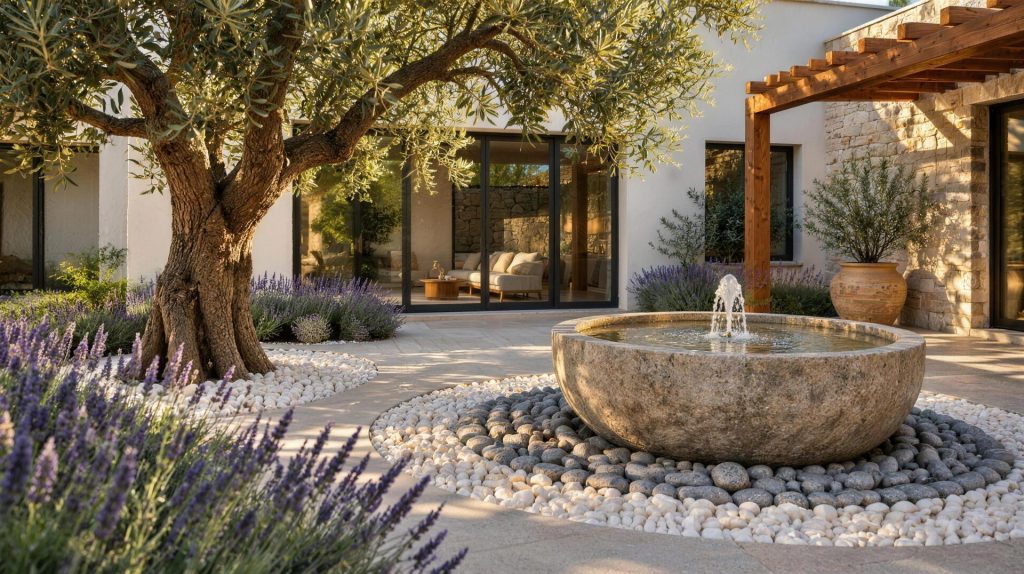
Use a string or a garden hose to outline the bed or path. Gentle curves look more natural than sharp corners and are easier to maintain.
Remove grass and weeds together with the roots and dig the soil 6 to 8 cm deep. Level the bottom with a rake and tread it down lightly.
Edging keeps the stone in place and separates it from the lawn, so pebbles do not spill onto the grass or get in the way when mowing.
Geotextile lets water through but stops weeds and keeps the stone from sinking into the soil. Overlap the strips by 10 to 15 cm and fix them with pegs.
Pour the stone gradually and rake it into an even layer of 4 to 5 cm. Place larger pieces along the edges and around plants.
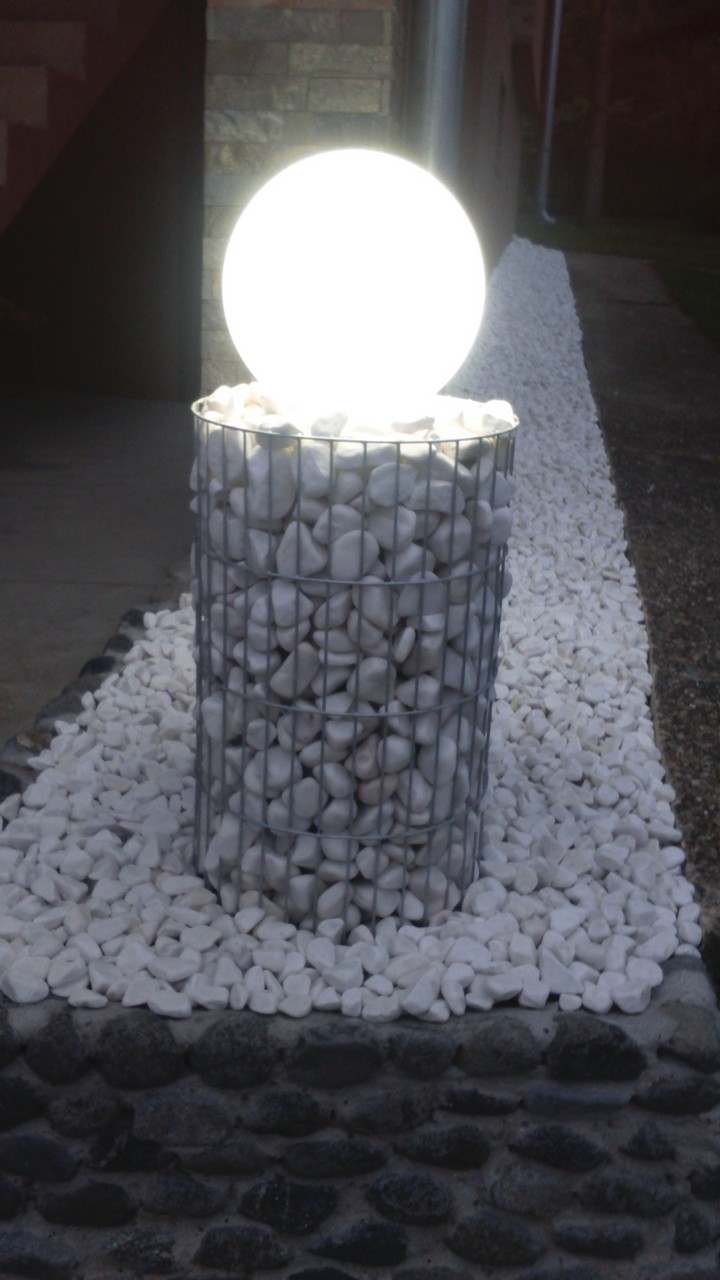
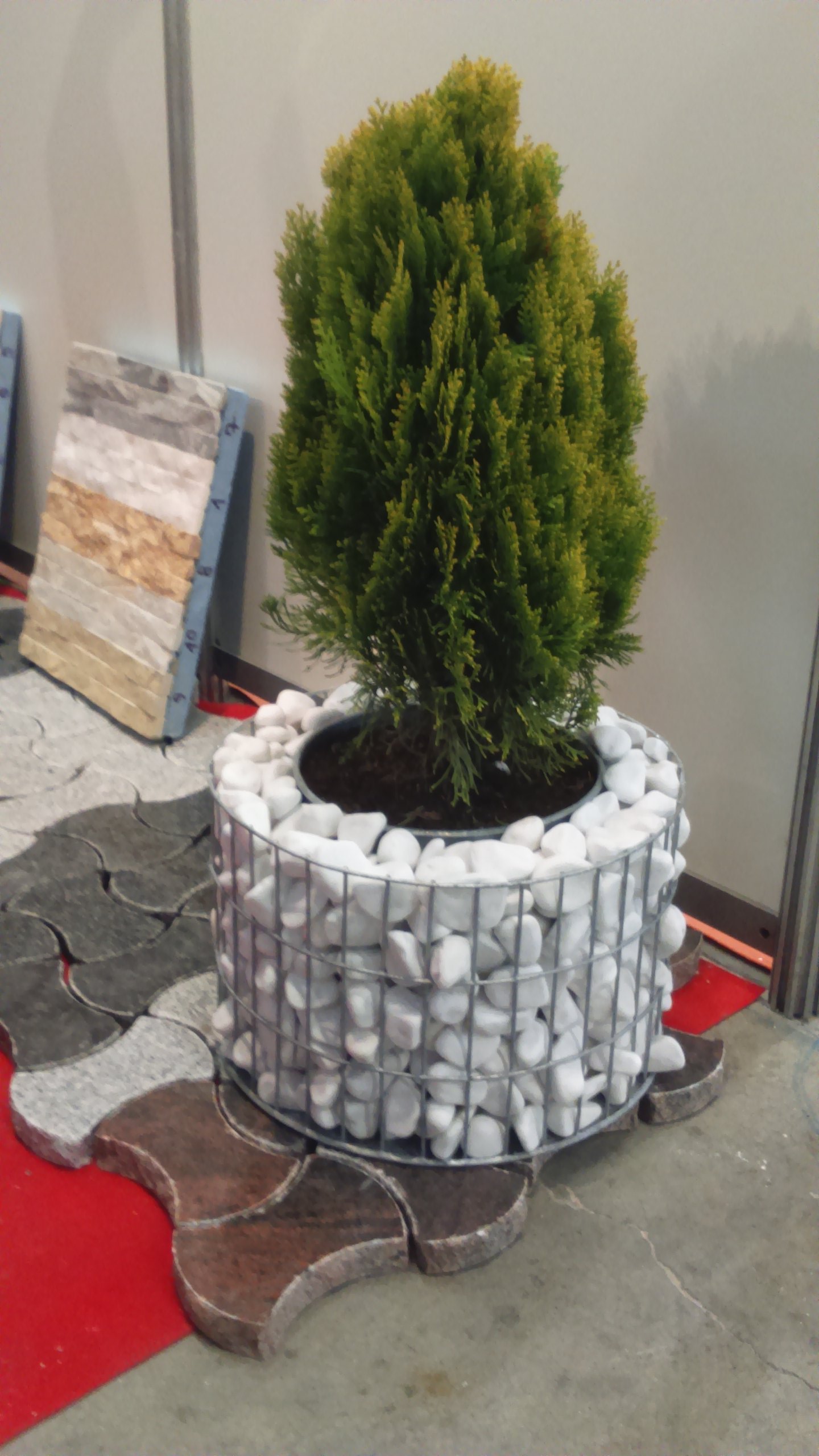
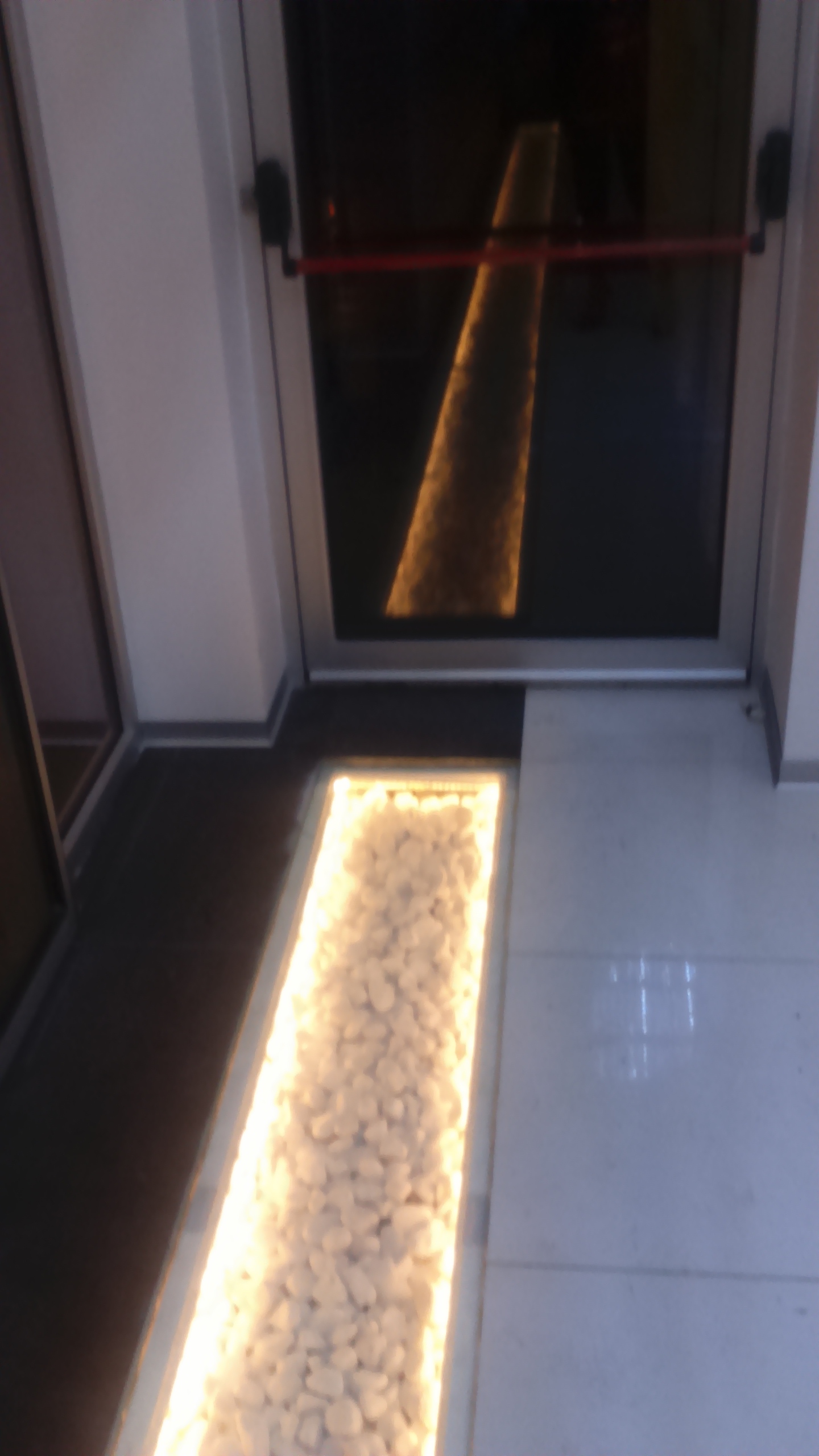
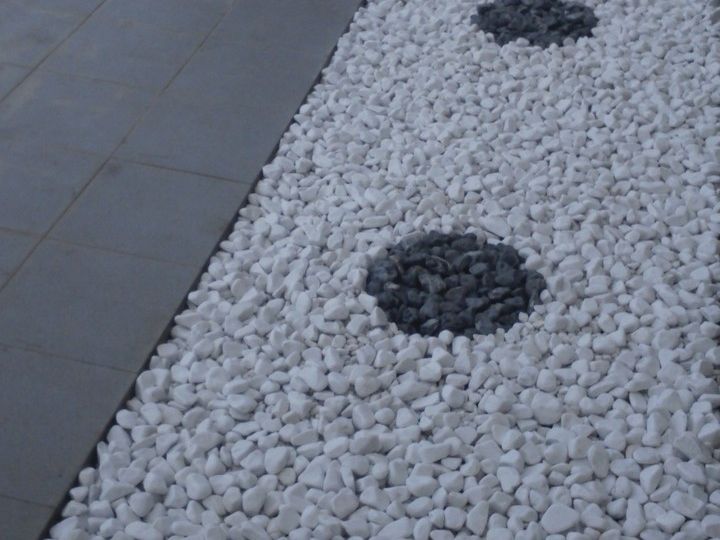
Plant through slits in the geotextile and add larger stone blocks or lights. A combination of white and black pebbles nicely highlights paths.
For a layer of 4 to 5 cm, count on roughly 70 to 80 kg of pebbles per square meter. See all colors and sizes on the pebble types page, and if you are not sure how much you need, call us and we will work it out together.
A pebble garden needs very little maintenance. Remove leaves and twigs with a rake or a leaf blower, and the odd weed that sprouts from windblown seed is easy to pull out, because it has nowhere to take root under the stone. Once a year, ideally in spring, rinse the pebbles with a garden hose and top up a thin layer of stone where it has thinned out.
It is not required, but we recommend it. Without geotextile the stone sinks into the soil over time and weeds break through more easily, so the area thins out faster and needs topping up.
For a small bed, yes, but the stone will sit higher than the lawn and spill more easily. Digging 6 to 8 cm deep and adding edging gives a neater, longer lasting result.
White marble pebbles are naturally white and do not fade in the sun. Over time dust and leaves collect on them, so rinse them with water from time to time. Under trees that shed a lot, grey or yellow pebbles are a better choice.
Stone is a durable material that does not deteriorate, so a landscaped area lasts for decades with occasional cleaning and topping up.